
Microsoft Corporation
Research update - shifting gears to software

I had planned to complete the fourth deep dive into non-banking financials with a primer into the insurance industry, alongside a follow-up deep dive on Fairfax Financial Holding (we already looked at Farmer Mac, FactSet and Visa/Mastercard)
After this, I had also planned to publish a premier on the credit reporting industry with a follow-on deep dive covering Experian, and then tackle our first bank investment research, NuBank and the broader Brazilian banking sector.
Developments in the software industry have, however, meant I’ll need to shift my attention, given the recent valuation drawdowns seen across the industry.
Even though I’ve published so far successful investment deep dives on other technology companies like Alphabet (March, 2025 - now exited) and TSMC (July, 2025 - ongoing investment position), I certainly don’t consider myself a technology or software expert but a generalist searching for value in quality companies.
As we identified during the global industry overview, software has produced some of the most durable, high-performing and profitable companies of all time, 2nd only to the tobacco and beverages sub-industry among all 60 sub-industries globally (GICS).
A handful of software companies have surprisingly found ways to survive several technology shifts. Since being born out of IBM, SAP continues to lead the Enterprise Resource Planning (ERP) market, 54 years later, with many other software sub-markets still dominated by the class of 1970s/early 80s companies (Oracle, Intuit, Apple, Adobe, Bloomberg and Microsoft).
I’ve learned from many great investors never to waste a drawdown, and I will be spending the next 150 hours researching Microsoft.
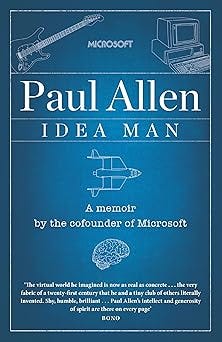
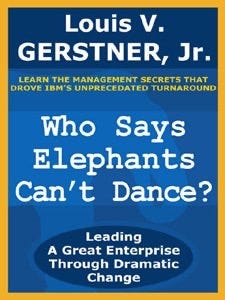
I’m currently finding similarities (and some differences) between the 1970s IBM-Microsoft relationship and the current Microsoft-OpenAI relationship, and the mainframe-to-PC transition, with the client-server to GenAI transition, and as I found during the Alphabet deep dive, I believe there are many learnings from the past that we can apply to how one assesses big tech today.
I also plan to publish another software deep dive after Microsoft (company yet to be decided, but Adobe is a challenger - no position), and premieres on both AI data centres and challenges for enterprise software in an LLM world.

For premium monthly readers who signed up to follow our financials research, I suggest pausing your subscription until May, when I plan to continue our financials research. For more generalist readers, we are about to get into the weeds in software. Here’s what I’ll cover in the Microsoft deep dive:

Microsoft’s deep dive table of content
History of Microsoft: A summary of Microsoft’s history, efforts in building enterprise software and beyond, across its four phases (Bill Gates, Steve Ballmer, Satya Nadella 1.0 and 2.0) and lessons from IBM’s struggles. Case studies on Microsoft’s challenges over the years and insights on its transition from the license model to SaaS and its early AI efforts, and a conclusion on the current state of its competitive advantages (distribution, bundling, balance sheet and switching costs).
Overview of Microsoft’s services: A breakdown of Microsoft’s product and service offerings and their performance relative to competitors, further overview of the past transition from license to SaaS and benefits gained, a deep dive into Azure’s cloud offerings and position, Copilot and Microsoft’s broader AI offerings in focus and the enterprise perspective of Microsoft (M365, Azure, Dynamics, security, windows and GitHub & developer tools).
Enterprise software industry: An overview of the broader enterprise software industry and a deeper analysis of Microsoft relative to other first-generation software companies (Oracle, SAP, Intuit and IBM), the broader commercial software business and productivity tools market (Alphabet Workspace and WPS) and the challenge from AI-native companies (Anthropic and OpenAI) to traditional enterprise software.
Inside Microsoft’s AI and data centre efforts: Insights into the current data centre and cloud computing market, a value chain overview from land permit to deployment, assessment of current competitors (Amazon, Alphabet and neocloud players), token economics and the Microsoft Fairwater strategy, the developer platform and its role in Microsoft’s AI efforts (GitHub Copilot, Visual Studio and OpenAI partnership) and the shift in market dynamics by AI layer (infrastructure, platform, applications and control points).
Business economics: A deep dive into Microsoft’s business economics by revenue (service type, business segment and geography), costs (cost of revenue, operating costs and Capex), assessment of the current state of Microsoft 365 competitiveness and strategy, Azure and Azure AI’s efforts and unit economics and a competitive landscape and further insights into LinkedIn and Gaming, and an overview of recent hyperscaler Capex growth trends, and its risks.
Growth opportunity: Analysis of its growth drivers (seat, ARPU and usage) across each business segment (server products and cloud services, commercial - insights into E5 to E7 and Copilot - and consumer products and cloud services, LinkedIn, gaming, Windows and devices, search and news advertising, dynamics products and enterprise services), an overview of the changing cost profile to its operating margins. Case studies on past capital allocation, M&A optionality, and distribution as a moat.
Risks and challenges: Further assessment of Microsoft’s transition into an asset-heavy business model, coopetition with OpenAI and Nvidia, an overview of the talent market among big tech companies, AI operational gaps to Alphabet, impact of a potential slowdown in AI at the enterprise level and concluding thoughts on its evolving value chain and other risks like cloud commoditisation, pricing pressure, lack of frontier model ownership, changing software architecture and the evolving regulatory landscape.
Valuation: An earnings multiples-led valuation and projection of Microsoft’s earnings potential through to 2030 FY, comparison with peers and the broader software industry.
Conclusion: Final thoughts on the broader software market downturn and concluding answers to the initial five Microsoft questions.